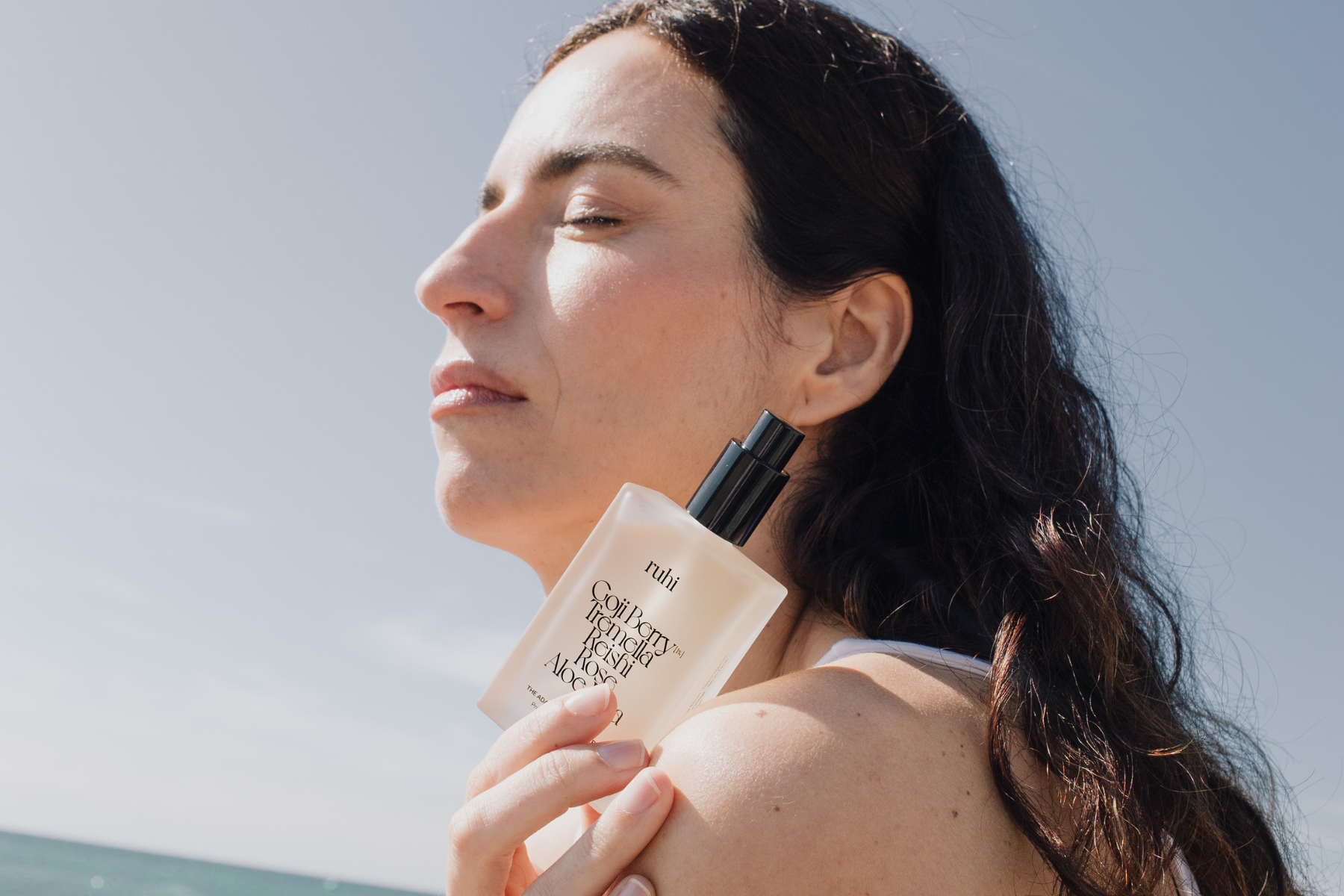

Exosomes have been extensively studied in research for several years, particularly in regenerative medicine. There, their potential is utilized to promote healing processes, a principle that is now increasingly being transferred to cosmetic applications. Exosomes are celebrated as a skincare game-changer and are considered the new super ingredient in slow aging. But what really lies behind the trend of exosome skincare?
We take a closer look at the active ingredient: What are exosomes, how do they affect the skin, and do they really have what it takes to revolutionize modern skincare? Let's take a look!
What are exosomes?
Exosomes are tiny, membrane-bound vesicles (bladders) released by cells that act as "messengers" between them. You can imagine them as very small parcel services that transport important information and materials (e.g., proteins, lipids, or RNA, i.e., blueprints for proteins) from one cell to the next.
What is particularly exciting is that exosomes are not just passive transporters. They contain specifically compiled biological "messages" that can activate certain processes in the recipient cells. This makes them highly precise tools in cell communication, which is crucial for repair processes and cell renewal, an aspect that makes them so interesting for skincare. Exosomes are a new class of active ingredients that can be recognized by the ending "Vesicles" on the INCI list (International Nomenclature of Cosmetic Ingredients), which lists all ingredients contained in a product.
What types of exosomes are there?
1. Human exosomes
These originate from human cells (e.g., mesenchymal stem cells, blood, etc.) and contain a variety of growth factors and signaling molecules. Applications of this form are more common in medical or clinical settings, not in classic cosmetic products, as they must be strictly controlled regulatory and safety-wise.
2. Plant exosomes
These are obtained from plant stem cells (e.g., from Centella Asiatica (Cica), green tea, or ginseng) and offer a natural, biocompatible alternative for cosmetic applications. Unlike the USA, only exosomes of plant origin are currently approved within the European Union. In Germany, the direct injection of the active ingredient is not yet permitted. Exosomes may currently only be applied topically to the skin.
How are plant exosomes obtained?
Plant exosomes are typically isolated from special plant cells or tissues. They are extracted from the cell fluid, purified, and standardized to maintain their structure and biological activity. These processes are highly complex and use modern technologies such as ultracentrifugation, filtration, and measurement methods to obtain and characterize pure vesicles.
The quality of the obtained exosomes depends heavily on the manufacturing process. Only if the structure and content of the vesicles remain intact can they fully develop their effect. High-quality cosmetic formulations therefore rely on particularly gentle and precise extraction methods.
Skincare with Exosomes and Skin Longevity
What does Skin Longevity mean?
Skin Longevity describes the goal of keeping the skin healthy, stable, and in balance over a long period, rather than just temporarily concealing visible signs of aging. This approach focuses on care that supports the natural functions of the skin, strengthens the skin barrier, and activates regeneration processes at the cellular level.
Skin Longevity pursues a preventive, sustainable approach. It's not just about skincare products: diet, sleep, stress levels, and general lifestyle also play a crucial role in skin appearance. This holistic approach reflects a growing awareness that skin health is not a short-term goal, but the result of many intertwined factors. Modern skincare is therefore increasingly understood as part of a comprehensive self-care concept.
What distinguishes Skin Longevity from anti-aging?
While anti-aging often works symptom-oriented, Skin Longevity is cause-oriented. It's not just about how the skin looks, but how it functions, a crucial difference that becomes visible in the long term. Classic anti-aging usually focuses on quick, visible results and minimizing signs of aging like wrinkles.
Skin Longevity, on the other hand, starts earlier: It supports the skin directly at the source of the aging processes, at the cellular level. The goal is to strengthen the skin long-term and prevent signs of aging from even appearing. Thus, Skin Longevity is a central component of a holistic slow-aging concept that specifically promotes the skin's repair and regeneration mechanisms.
This is how exosomes support Skin Longevity
This is exactly where exosome skincare comes in and supports these fundamental processes:
1. Cell communication and repair
Exosomes transport bioactive molecules directly to cells and can thus effectively transmit signals for regeneration, cell division, protection against oxidative stress, or inflammation regulation. This supports the skin's natural ability to renew itself, a process that slows down with age and requires targeted impulses.
2. Improved absorption of active ingredients
Studies show that plant exosomes are absorbed more efficiently by skin cells than conventional plant extracts due to their size and lipid structure. [2] This means that the "messages" in exosomal active ingredients reach deeper skin layers better, which increases their effectiveness. This is also referred to as improved bioavailability, i.e., the ability of an active ingredient to actually reach where it is needed.
3. Slow-aging through collective mechanisms of action
Exosomes can stimulate the activity of fibroblasts, i.e., cells that form collagen and elastin, and thus contribute to improving skin elasticity, moisture retention, and structure.
4. Protection against environmental stress
Plant exosomes help to reduce oxidative stress and thus strengthen the skin barrier. Especially in urban environments, where the skin is exposed daily to environmental stressors such as fine dust and UV radiation, this protective mechanism is becoming increasingly important.

Who is an exosome cream suitable for?
Skincare with exosomes is generally suitable for all skin types, but particularly benefits:
-
Mature skin: Regeneration processes slow down with age. Exosomes can specifically initiate these processes and thus improve elasticity and skin structure in the long term.
-
Dry and stressed skin: The regenerating and barrier-strengthening properties of exosome creams make them ideal for skin that needs intensive care and moisture.
-
Sensitive skin: Cica exosomes from Centella Asiatica are particularly well tolerated by sensitive skin, as they have both a calming and regenerating effect.
-
First signs of aging: Those who want to take preventive measures before wrinkles and loss of elasticity become visible will find an effective slow-aging partner in skincare with exosomes.
Exosome skincare at ruhi
All these properties also convinced us and prompted us to develop our own exosome cream. For our Longevity Exosome Cream, we use a highly effective active ingredient complex with 2% plant-based Cica exosomes and 0.5% copper peptides, which intensively nourishes and initiates regeneration processes at the cellular level.
Our hero ingredient: Centella Asiatica (Cica)
Centella Asiatica, also known as Indian or Asian pennywort and tiger grass, is one of the best-known traditional medicinal herbs and has been used for medicinal and cosmetic purposes for 5,000 years. In recent years, the number of products containing Centella Asiatica ingredients under the name CICA has rapidly increased. Its popularity, reliability, and effectiveness make this plant the ideal source for obtaining plant exosomes.
Centella Asiatica is one of the best-known adaptogens, i.e., plants that help the body adapt to stress and external influences and thereby strengthen natural protective and regenerative mechanisms. In skincare, this makes it a particularly powerful active ingredient: Cica has been proven to stimulate collagen synthesis, strengthen skin structure, and has outstanding slow-aging capabilities. This makes it not only an ideal source for plant exosomes but also a highly effective slow-aging active ingredient that ensures long-term healthy and vital skin on several levels.
Scientifically confirmed effectiveness
Although the overall study situation is still quite new, the results so far consistently show positive effects regarding moisture content, skin structure, regeneration, and slow-aging parameters, especially when Cica exosomes are correctly isolated and formulated.
Manufacturing process
The Cica exosomes we use for our formulation are extracted from the Centella Asiatica plant using patented technology. This technology enables the production of highly concentrated exosomes without damaging their structure. Only through this precise processing can it be ensured that the exosomes retain their full biological activity and can work effectively in the skin.
How the Longevity Exosome Cream works
The rich exosome cream stimulates collagen and elastin production, thus reducing wrinkles and lines. At the same time, it intensively nourishes and hydrates and strengthens the skin barrier. The combination of regenerating active ingredients and barrier-strengthening care makes it the ideal cream for mature and dry skin. Thanks to its clinically proven, particularly skin-friendly formulation, it is also suitable for sensitive skin.
The ingredients at a glance
In addition to the innovative longevity formulation with 2% Cica exosomes and 0.5% copper peptide, our exosome cream contains other valuable active ingredients:
-
Resveratrol from grapes (protects against oxidative stress)
-
Ceramides (natural fats that protect against moisture loss)
-
Organic saffron (anti-inflammatory)
-
Squalane from organic sugar cane (intensively nourishes the skin)
-
Silver ear mushroom (plant-based hyaluronic acid, hydrates)
This combination of active ingredients ensures a balanced ratio of protection, regeneration, and intensive care: three central pillars of modern Skin Longevity.

How and when should an exosome cream be used?
The application of an exosome cream is uncomplicated and can be easily integrated into any existing skincare routine:
-
Apply morning and evening to cleansed, slightly damp skin after facial cleansing.
-
A hazelnut-sized amount is sufficient for the face, neck, and décolleté.
-
Gently massage until the cream is completely absorbed.
-
For best results: Continuous application for at least 4 to 8 weeks.
Tip: The Longevity Exosome Cream is ideal as the final care step in the evening skincare routine, when the skin naturally ramps up its regeneration processes.
Conclusion
Exosome creams open up new dimensions in skincare: They work at a cellular level and can improve skin structure even before damage occurs. This makes them a real game-changer in terms of Skin Longevity. Plant-based exosomes in particular offer a natural, well-tolerated solution for effective slow aging.
The goal is not to completely stop skin aging, but to maintain the health, function, and vitality of the skin over a longer period. Exosomal creams address several key points by:
-
improving cell communication,
-
supporting repair mechanisms,
-
protecting against environmental influences,
-
promoting elasticity and moisture.
Thus, they contribute to sustainably healthy and vital skin: the core of every slow-aging ritual. So, for those who want to take action before the skin's aging processes become visible, skincare with exosomes has found a new best friend.
Frequently asked questions about exosomes in skincare
How do exosomes affect the skin?
Exosomes act as cell messengers: They transport bioactive molecules such as proteins, lipids, and RNA directly to skin cells and activate repair and regeneration processes there. They improve cell communication and can thus promote collagen production, moisture retention, and the skin's barrier function.
Are exosome creams really effective?
Initial clinical studies (especially on Cica exosomes from Centella Asiatica) show positive effects on skin moisture, elasticity, and regeneration. The study situation is still relatively new overall, but the results so far are promising, especially when the exosomes are extracted and formulated to a high standard.
What is the difference between plant-based exosomes and normal plant extracts?
Ordinary plant extracts contain a broad mixture of ingredients. Plant-based exosomes, on the other hand, are specifically isolated vesicles that can penetrate deeper skin layers due to their lipid structure. They have significantly higher bioavailability and transmit targeted cellular "messages."
Which exosomes are allowed in Germany?
In the EU (and thus also in Germany), only plant-based exosomes are currently approved for cosmetic products. Human exosomes from stem cells are prohibited. In addition, exosomes may only be applied externally to the skin; injections are not permitted.
Can I also use an exosome cream on sensitive skin?
Yes. Plant-based Cica exosomes from Centella Asiatica are known for their calming and tolerable effect. The Longevity Exosome Cream from ruhi is clinically tested and dermatologically proven to be suitable for sensitive skin.
When should one start with exosome care?
Skin Longevity pursues a preventive approach, so an early start is advisable. Many experts recommend starting regenerative care from the mid-to-late 20s, when the first signs of sagging or moisture loss appear. However, exosomal skincare is effective at any age.
How long does it take for an exosome cream to work?
First visible changes, especially regarding moisture and skin structure, usually appear in clinical studies after 4 to 8 weeks of continuous use. For long-term slow-aging effects, continuous integration into the daily routine is recommended.
Sources
[1] Villarreal-Gómez et al. (2025): Use of Exosomes for Cosmetics Applications. Cosmetics 12(1):9. https://doi.org/10.3390/cosmetics12010009
[2] Cho et al. (2022): Confirmation of plant-derived exosomes as bioactive substances for skin application through comparative analysis of keratinocyte transcriptome. Appl Biol Chem 65:8. https://doi.org/10.1186/s13765-022-00676-z
[3] Sfriso et al. (2024): Unlocking the Power of Plant Exosomes (PDEVs). Cosmetics & Toiletries. https://shorturl.at/xbmzn
[4] Liu et al. (2025): Plant-derived exosome-like nanovesicles: a novel therapeutic perspective for skin diseases. J Nanobiotechnol 23:640. https://doi.org/10.1186/s12951-025-03715-1
[5] Park & Shin (2025): Clinical Efficacy and Safety Evaluation of a Centella asiatica-Derived Extracellular Vesicle Formulation for Anti-Aging Skincare. Cosmetics 12:135. https://doi.org/10.3390/cosmetics12040135
[6] Chang et al. (2025): A 28-Day Pilot Study of the Effects on Facial Skin Hydration, Elasticity, and Texture of a Centella asiatica Extracellular Vesicle-Based Skin Care Formulation. Cosmetics 12:186. https://doi.org/10.3390/cosmetics12050186
[7] Chung et al. (2006): Asiaticoside induces human collagen I synthesis through TGFβ receptor I kinase-independent Smad signaling. Planta Med 72(4):324–329. https://doi.org/10.1055/s-2005-916227