We all want smooth, plump, even-toned skin with a beautiful glow. While this is natural at 20, it usually requires a clever beauty regimen from 30 onwards. Lack of sleep, a challenging daily routine, oxidative stress, and an unbalanced diet now show on us much faster than before.
The most common cause of tired, dull skin with fine lines around the eyes and crepey wrinkles is skin dehydration. And this is where squalane comes in. In this article, you'll learn everything about the effects and application of squalane and what else you should consider.
Before we go into detail on how squalane can contribute to better skin hydration, we first want to briefly mention the topic of dry skin. Because every skin type can become dry – for example, in autumn and winter due to dry heating air.
Therefore, a distinction is made between skin type (e.g., oily-impure, sensitive, dry, mature) and skin condition (e.g., impure, dry, reddened). A very important note: Even if you tend to oily skin (skin type), your skin can be dry (skin condition).
How does skin store moisture and how does squalane contribute?
Our skin consists of a complex moisturizing system, which we will discuss in more detail below. If you are interested in this topic, be sure to read the article on Natural Moisturizing Factors.
Natural Moisturizing Factors for more moisture
Our skin has its own natural moisturizing factors, or NMFs for short. These natural moisturizing factors are a mixture of water-loving (hydrophilic) active ingredients such as amino acids, lactic acid, and urea. This cocktail ensures that water can be stored in the skin cells. Clever, isn't it?
A healthy skin barrier protects against dehydration
In addition to the natural moisturizing factors, the skin barrier also plays a significant role in storing moisture in the skin. It consists of fats and helps prevent water from evaporating too quickly from the corneocytes.
If your skin barrier is disturbed, it becomes more permeable. The skin's protective and storage function is no longer intact. Dry ambient air can then easily draw water from your skin – no matter how much moisture you apply. The result: dehydration of the skin, a dull complexion, and more lines and wrinkles.
So, the stronger your skin barrier, the better the skin can store the moisture supplied by care products.
Less skin moisture in old age
So, you now know that the moisture content of your skin depends not only on the moisture supplied to it but also on the strength of the skin barrier. This system no longer functions optimally with increasing age. The skin can no longer properly deliver and bind the moisture supplied by care products into the deeper skin layers. [1]
This makes the skin more susceptible to premature skin aging, which we see in the mirror as dry patches, dull complexion, lines and wrinkles, and redness. If the natural lipid film of the uppermost skin layer, the skin barrier, is also disturbed, UV rays, fine dust, bacteria, viruses, and germs have an easy time damaging the cells.
And that's exactly where squalane can help!

What is Squalane?
Squalane or squalane oil is not a natural moisturizing factor (NMF), but a lipid or fat. Squalane therefore does not moisturize in the true sense of the word. Squalane is a clear, colorless and odorless oil that leaves a wonderfully soft, non-greasy feeling when applied to the skin. It has a particularly high spreadability value (describes the ability of cosmetic oils to spread independently on the skin; the higher, the more spreadable) of 602 and is absolutely non-irritating.
Squalane vs. Squalene
Squalane is similar to a substance that naturally occurs in skin sebum – namely squalene. However, squalene as an unsaturated fatty acid is not suitable for cosmetic production, as it has a very short shelf life. Squalene is therefore converted into squalane, making it oxidation-stable and longer lasting (you can find out exactly how the substance is obtained further below). This creates the popular colorless and odorless oil that is fantastic for facial care.
Squalane effect
As an occlusive, squalene is involved in the formation of the skin barrier. It seals the skin, so to speak, thus preventing excessive moisture loss from the skin. Squalene or squalane thus contributes to higher skin hydration. [2]
Squalane optimizes moisture balance
To help your skin store moisture, you can use the natural active ingredient oil squalane in your skincare. As already mentioned above, the oil occurs in an almost identical form naturally in sebum and seals the skin, protecting it from dehydration. But that's not all; squalane can do even more!
Squalane is an antioxidant
The active ingredient squalane also has an antioxidant effect. It counteracts oxidative stress from free radicals and can alleviate skin damage caused, for example, by UV radiation. [3]
Squalane has anti-inflammatory properties
Furthermore, squalane is an anti-inflammatory. It can minimize redness and reduce dry skin patches. People who suffer from very dry skin and neurodermatitis, and often struggle with itchy and burning skin, particularly benefit from this effect. [4]
Squalane application
Since squalane is a substance naturally found in the skin, it is very well tolerated. Even people with sensitive skin can use squalane without hesitation. You can decide for yourself whether to buy pure squalane or to let it work in combination with other powerful ingredients, such as in our Bakuchiol Oil Serum.
How is squalane obtained?
Squalene used to be extracted only from shark liver. This is where its name comes from: Squalus is Latin for shark. The plant-based version, which is obtained, for example, from amaranth oils (very high content of 8%), press residues of olive, avocado, wheat germ, or rice, is very well tolerated and can be easily absorbed by the skin. Another particularly high-quality squalane source is sugar cane.
Squalane is not just squalane - ruhi squalane
As you can imagine, there are also huge differences in quality when it comes to squalane. Depending on the raw material used for squalane production, the purity level can vary greatly. For our Bakuchiol Oil Serum and the Adaptogen Vitamin C Oil Serum, we at ruhi exclusively use highly pure, bio-based squalane from sustainably grown sugar cane, which achieves an outstanding purity level of approx. 96%.
Certified organic quality
Our squalane from organic sugar cane is a certified organic raw material that intensely nourishes the skin, improves its moisture balance, and makes it incredibly supple. This valuable squalane is light, non-greasy, and quickly absorbed.
Microbiome-friendly tested with "excellent" rating
Our skin is home to a multitude of microorganisms. This so-called skin microbiome is essential for skin health. If it gets out of balance, skin diseases such as dermatitis or psoriasis can occur. That's why we always ensure that our active ingredients are microbiome-friendly.
Our high-quality squalane scored excellent (1.1 to 1.2) in the recognized MyMicrobiome Standard 18.10, 19.10 and 20.10 tests. [5]
All benefits of the squalane used at ruhi
Here is an overview of all the scientifically confirmed benefits of our squalane oil:
- Increases skin hydration
- Reduces fine lines and wrinkles
- Improves skin elasticity and firmness
- Supports the skin barrier
- Smoothes the skin
- Sustainably and naturally sourced
- Organically certified
- Microbiome-friendly (test: excellent)
How does squalane work in ruhi oil serums?
In combination with bakuchiol, which stimulates the skin's own collagen synthesis, precious antioxidant organic pomegranate seed oil, soothing organic turmeric, and regenerating vitamin E, the organic squalane in our Bakuchiol Oil Serum works particularly well. The highly concentrated, deeply effective oil serum optimally supports the skin so that it can glow naturally.
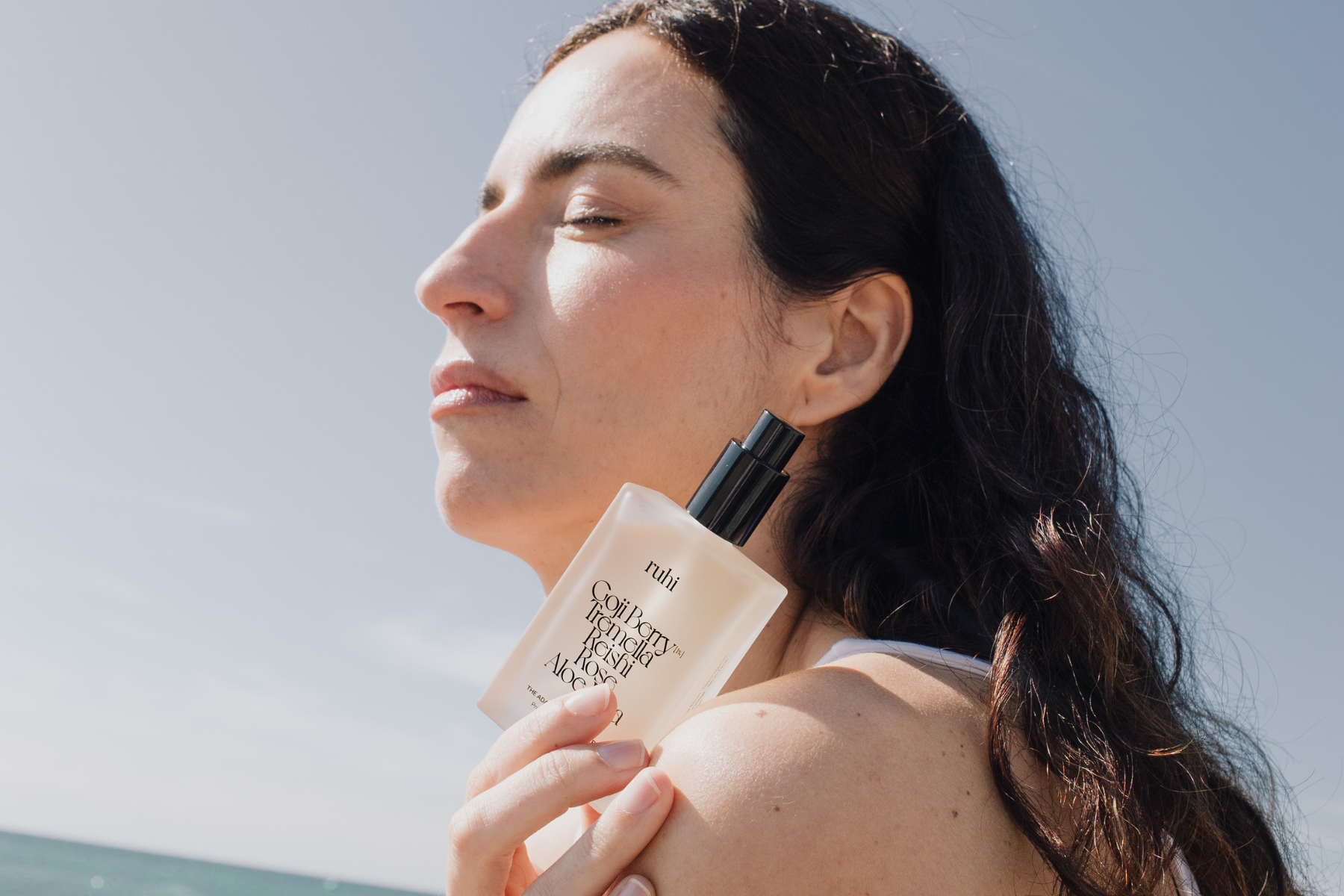
Together with Vitamin C Tetra, Haematococcus Pluvialis, organic Gotu Kola, organic Ginkgo, organic plum seed oil and natural Vitamin C, the Adaptogen Vitamin C Oil Serum has a protective, brightening and firming effect. It also reduces the signs of skin aging and specifically protects against new ones, intensely nourishes the skin and provides a radiant, even complexion.
Here's how to apply the oil serums correctly:
After cleansing, you can apply the oil serum to damp skin and gently massage it in. After just a few minutes, it will be completely absorbed and your skin will be soft and supple. Enjoy your unique glow and baby-soft skin!
Sources
[1] M. Augustin et al. Prevalence, predictors and comorbidity of dry skin in the general population. J. Eur. Acad. Dermatol. 2019; 33, 147. https://pubmed.ncbi.nlm.nih.gov/29953684/
[2] Boussouira, Boudiaf & Pham, Dang-Man. (2016). Squalene and Skin Barrier Function: From Molecular Target to Biomarker of Environmental Exposure. 10.1007/978-3-319-43157-4_2. https://www.researchgate.net/publication/306385965_Squalene_and_Skin_Barrier_Function_From_Molecular_Target_to_Biomarker_of_Environmental_Exposure/citation/download
[3] Huang ZR, Lin YK, Fang JY. Biological and pharmacological activities of squalene and related compounds: potential uses in cosmetic dermatology. Molecules. 2009 Jan 23;14(1):540-54. doi: 10.3390/molecules14010540. PMID: 19169201; PMCID: PMC6253993. >https://www.ncbi.nlm.nih.gov/pmc/articles/PMC6253993/
[4] Sánchez-Quesada C, López-Biedma A, Toledo E, Gaforio JJ. Squalene Stimulates a Key Innate Immune Cell to Foster Wound Healing and Tissue Repair. Evid Based Complement Alternat Med. 2018 Sep 30;2018:9473094. doi: 10.1155/2018/9473094. PMID: 30363968; PMCID: PMC6186384. https://pubmed.ncbi.nlm.nih.gov/30363968/