Antioxidants, peptides, enzymes: If you're interested in skincare, you've probably heard of these terms. Adaptogens, however, are a different story. They are (still) a real insider tip, but one that could soon become a trend (because it really works).
In this article, we'll take a closer look at these exciting natural active ingredients and show you how they can support you in your daily beauty routine and make your skin glow.
What are adaptogens?
Adaptogens are special biologically active substances from plants or fungi that help the skin better adapt to challenging environmental stimuli and conditions, thus preventing damage. They also make the skin barrier more resistant to UV light, climatic stimuli, and germs.
Adaptogens help your skin adapt and protect itself
The term adaptogen comes from English and is derived from "to adapt." In TCM and Ayurveda, adaptogens have been very popular for many centuries. There, they are used, among other things, as a means of stress management and accelerating healing.
However, they became better known through the research of the Russian scientist Nicolai Vasilevich Lazarev, who in 1958 investigated the effect of certain plant substances in connection with environmental stressors (oxidative stress) on the skin. He sees adaptogens as "adapters," a link between external factors and the skin's own processes, as well as the body's ability to adapt to the environment.
Oxidative stress causes skin aging
Focusing on the skin as our largest organ, we know that an unhealthy lifestyle, too little sleep and too much stress, too little exercise, and too much screen time (keyword HEV light) promote skin aging. If continuously unfavorable environmental influences – especially UV radiation – are added, free radicals have an easy time.
Free radicals are – put simply – metabolic products (oxygen molecules or organic compounds) that are continuously produced in every cell. Too many free radicals damage skin cells and hinder regeneration and cell renewal. This causes oxidative stress to the skin, which leads to skin aging.
This means: From the age of 30, you should rely on effective slow-aging skincare that is rich in free radical scavengers (antioxidants) and adaptogens to prevent premature skin aging and reduce or ideally repair existing cell damage.
Which plants and fungi are adaptogens?
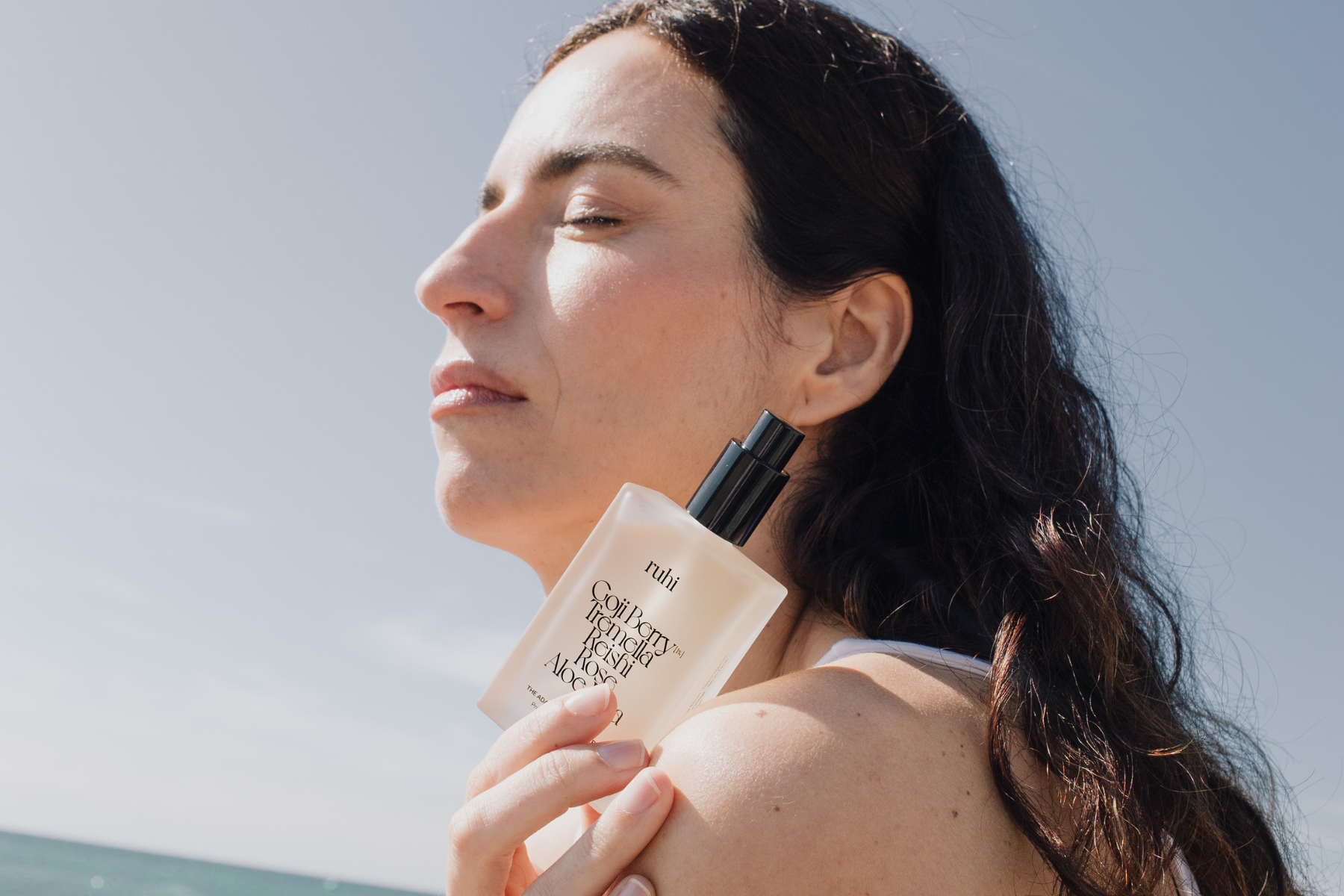
Ruhi is entirely dedicated to the power of adaptogens for skincare. In all our skincare products, you'll find the slow-aging heroes that we would like to introduce to you in more detail below.

Reishi
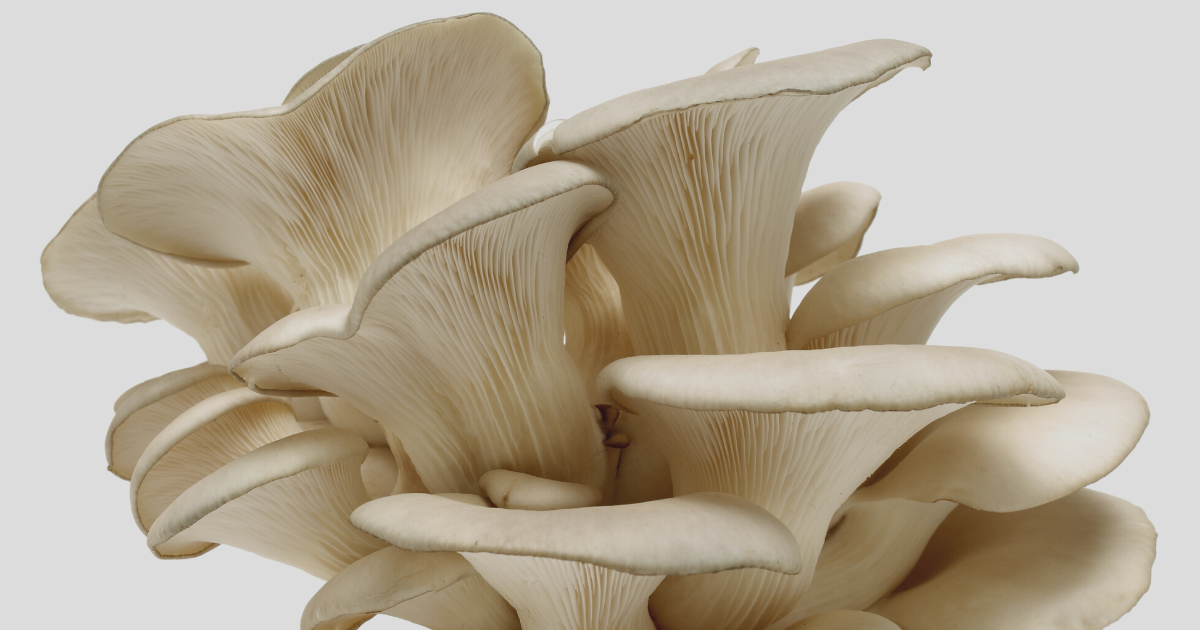
In Traditional Chinese Medicine, Reishi is considered the Mushroom of Immortality because it protects cells from oxidative stress. This vital mushroom is rich in antioxidants and polysaccharides, protecting the skin from free radicals and oxidative stress. [1] It supports the skin barrier's resilience against environmental influences. At ruhi, you'll find Reishi in the Adaptogen Toner Serum.
Bakuchiol
Bakuchiol is considered a natural and well-tolerated alternative to retinol. It is extracted from the leaves and seeds of the Indian Babchi plant. It has long been very popular in Ayurveda and TCM, and it is the new trend active ingredient in the European cosmetics industry.
Bakuchiol has been shown to stimulate collagen production, minimize wrinkles and lines, and improve skin texture and firmness. [2] It is suitable for all skin types – even sensitive skin. If you think Bakuchiol is exactly what your skin needs, then the Bakuchiol Oil Serum is an excellent choice.

Tremella
This vital/edible mushroom is known by many names: Snow mushroom, silver ear, white jelly-leaf, and Shirokikurage are just a few titles for this powerhouse, which grows preferentially on mango wood in subtropical and tropical climates. In Asia, however, this popular mushroom is also cultivated on wood substrate.
Tremella extract is the purely plant-based counterpart to hyaluronic acid. It helps the skin bind large amounts of moisture – even into the deep skin layers. [3] Want to try it out? Then check out our Probiotic Hyaluronic Serum.

Turmeric
Turmeric, also known as yellow ginger, is one of the most important medicinal plants in Indian Ayurvedic healing. Turmeric is said to have antibacterial, circulation-boosting, and vitalizing effects.
This is due to the curcumin it contains. It stimulates cell renewal, acts as a radical scavenger, is antibacterial, and reduces sebum production in oily skin. [4] You can find turmeric in our Bakuchiol Oil Serum.
Goji Stem Cell Extract
Stem cell research for the cosmetics industry has enormous potential. However, unlike in the medical field for healing severe burns, research here is not conducted with human stem cells but with plant stem cells.
Like humans, plants also have stem cells. They are found at the tips of shoots and at the root tips. International studies have shown that extracts from plant stem cells are rich in polyphenols, phenolic acid, flavonoids, triterpenes, carotenoids, and peptides. Due to this power-mix, these small slow-aging stars can boost the skin's natural collagen/elastin production and thus ward off premature skin aging. [5]
Especially the stem cells of goji berries are promising slow-aging helpers. In Traditional Chinese Medicine (TCM), the small red berries have always been popular: They contain a lot of vitamin C, B1 and B2, iron, phosphorus, flavonoids, magnesium, carotenoids, phenolic acids, peptides, and polyphenols. They also score with valuable amino acids and antioxidants.
The skin benefits from the rejuvenating, firming, and skin tone-evening effect, as well as the stimulation of the skin's own collagen synthesis. At ruhi, you can find this great innovation in the Adaptogen Toner Serum.
Ginkgo
The Ginkgo Biloba tree can live for several thousand years. It is a symbol of hope and long life. Because of its dense and lush foliage, which it does not lose even in autumn, Asians attribute to it a special resilience against environmental influences. [6] No wonder Ginkgo is very much in vogue in TCM.
It is found not only in dietary supplements but also as an extract in skincare. Ginkgo is said to improve skin elasticity, regenerate, and prevent wrinkles. It can also boost microcirculation and provide a rosy, fresh glow. Ruhi uses this all-rounder in the Adaptogen Vitamin C Oil Serum.
Gotu Kola
Gotu Kola – that sounds exotic. Perhaps you know this plant from Asia better as Indian pennywort, tiger grass, or Cica? This active ingredient experienced a real hype in recent years – and fully deservedly so. Because the plant extract has many positive properties for the complexion. Which ones?
It is anti-inflammatory, anti-oxidative, promotes collagen synthesis, and can help small wounds and scars heal faster. [7] Particularly sensitive and dry skin benefits from this wonder active ingredient, which can be found in ruhi's Adaptogen Vitamin C Oil Serum.
Practical tips for slow-aging
To achieve the best possible skincare effect for your skin with products containing adaptogens, you should
- maintain a healthy lifestyle,
- always protect your skin from the sun,
- cleanse it morning and evening with a gentle cleansing product to remove excess sebum and dirt particles, and
- ensure adequate fluid intake through water and unsweetened teas (at least 2 liters per day).
To stimulate blood circulation in the skin, which is important for optimal absorption of active ingredients, you can use our facial brushes or one of our other face tools for massage. Now apply your chosen ruhi skincare product and pamper your skin.
By the way: All our facial care products are free from essential oils, alcohol, synthetic colors, fragrances, and preservatives. Of course, we also refrain from microplastics, mineral oil, silicones, and parabens. This makes our care particularly well-tolerated for sensitive skin.
SOURCES
[1] Zeng Q, Zhou F, Lei L, Chen J, Lu J, Zhou J, Cao K, Gao L, Xia F, Ding S, Huang L, Xiang H, Wang J, Xiao Y, Xiao R, Huang J. Ganoderma lucidum polysaccharides protect fibroblasts against UVB-induced photoaging. Mol Med Rep. 2017 Jan;15(1):111-116. doi: 10.3892/mmr.2016.6026. Epub 2016 Dec 12. PMID: 27959406; PMCID: PMC5355704.
[2] Chaudhuri RK, Bojanowski K. Bakuchiol: a retinol-like functional compound revealed by gene expression profiling and clinically proven to have anti-aging effects. Int J Cosmet Sci. 2014 Jun;36(3):221-30. doi: 10.1111/ics.12117. Epub 2014 Mar 6. PMID: 24471735. https://pubmed.ncbi.nlm.nih.gov/24471735/
[3] Ma X, Yang M, He Y, Zhai C, Li C. A review on the production, structure, bioactivities and applications of Tremella polysaccharides. Int J Immunopathol Pharmacol. 2021 Jan-Dec;35:20587384211000541. doi: 10.1177/20587384211000541. PMID: 33858263; PMCID: PMC8172338. https://pubmed.ncbi.nlm.nih.gov/24471735/
[4] Vaughn AR, Branum A, Sivamani RK. Effects of Turmeric (Curcuma longa) on Skin Health: A Systematic Review of the Clinical Evidence. Phytother Res. 2016 Aug;30(8):1243-64. doi: 10.1002/ptr.5640. Epub 2016 May 23. PMID: 27213821. https://pubmed.ncbi.nlm.nih.gov/27213821/
[5] Miastkowska, M.; Sikora, E. Anti-Aging Properties of Plant Stem Cell Extracts. Cosmetics 2018, 5, 55. https://doi.org/10.3390/cosmetics5040055
[6] Campos PM, Gianeti MD, Mercurio DG, Gaspar LR. Synergistic effects of green tea and ginkgo biloba extracts on the improvement of skin barrier function and elasticity. J Drugs Dermatol. 2014 Sep;13(9):1092-7. PMID: 25226010. https://pubmed.ncbi.nlm.nih.gov/25226010/
[7] Ratz-Łyko A, Arct J, Pytkowska K. Moisturizing and Antiinflammatory Properties of Cosmetic Formulations Containing Centella asiatica Extract. Indian J Pharm Sci. 2016 Jan-Feb;78(1):27-33. doi: 10.4103/0250-474x.180247. PMID: 27168678; PMCID: PMC4852572. https://pubmed.ncbi.nlm.nih.gov/27168678/