
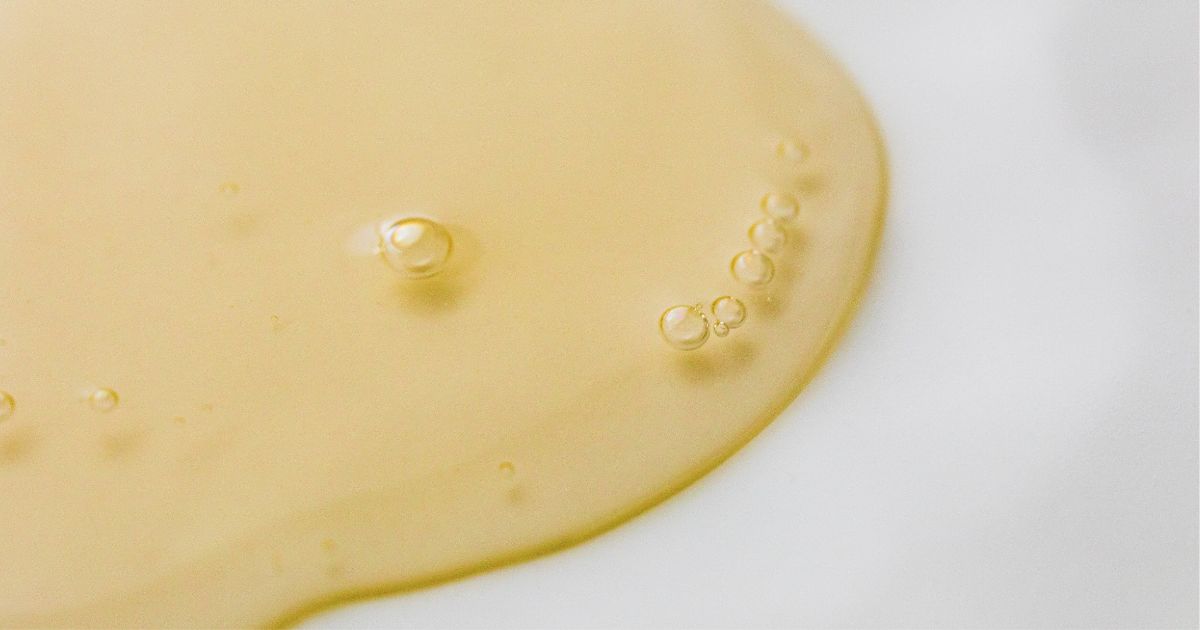
Cleansing your face with oils – that might sound like a rather greasy affair at first. Fortunately, the latest cleansing oils, also known as oil cleansers, are so well-developed that you won't be left with a greasy film. Here you'll learn what oil cleansing does, how your skin can positively change with its use, and how to identify good cleansing oils.
Facial Cleansing with Oil: How Does a Cleansing Oil Work?
Cleansing oils work based on the so-called oil-pulling method. The cleansing oil combines with existing skin oils, dirt, or makeup on the skin. This mixture of oils and residues is then rinsed off with water.
But why exactly should you cleanse your face with oil? The advantage of a cleansing oil is that it is able to remove both water-soluble and oil-soluble impurities from the skin. This helps oil cleansing to clean the skin even more thoroughly than a water-based cleanser. And all without irritation or dryness! A real win-win situation for your skin.
Oil Cleansing: Do Cleansing Oils Clog Your Pores?
Are you worried that cleansing oils clog pores and cause pimples? Don't worry: Oil-based facial cleansers are generally known to deeply clean pores rather than clog them. In fact, cleansing oils can help loosen excess oil, dirt, makeup, and other impurities from the skin by mixing with these substances and then being thoroughly washed away.
So, it's unlikely that cleansing oils will clog your pores, as long as you use them correctly and rinse them off thoroughly afterward. You can find tips and tricks for proper application further down.

Which Skin Types is an Oil Cleanser Suitable For?
Does an oil cleanser suit your skin? A cleansing oil is basically suitable for all skin types. Oil cleansing offers a thorough and gentle cleansing that can benefit any skin type.
However, as a study in 2010 found, cleansing oils are particularly suitable for you if you have dry or mature skin [1]. Dry skin types naturally lack fat, leading to brittle and taut skin. Oil cleansers prevent the skin from drying out further. They leave the skin soft and supple and reduce dehydration lines.
The same applies to mature skin types. With age, our skin loses its ability to bind water and fats. This is accompanied by a loss of elasticity and firmness. A nourishing oil cleanser is an absolute must to improve skin suppleness and provide it with nourishing oils. Plant-based oils also naturally contain antioxidants, which counteract skin aging.
These 4 Benefits Come with Cleansing Oils
As indicated at the beginning, oil cleansing has many benefits for you that you might not necessarily expect from a water-based cleansing product.
Specifically, a good oil cleanser provides the following benefits:
Thorough Removal
Cleansing oils are very effective at removing dirt, excess oil, sunscreen, and makeup. Especially waterproof products can be removed easily with oil cleansing. Water-based facial cleansers often fail here and leave unsightly panda eyes – who doesn't know it!
An oil cleanser dissolves makeup residues and impurities and allows for thorough cleansing without irritating or drying out your skin. Oil cleansers are also the most effective way to remove sunscreen residues [2].
Nourishing Boost
Cleansing oils can help make your skin smoother [1]. They ideally contain natural oils or moisturizing ingredients that improve skin elasticity and preserve the skin's moisture content.
No Skin Irritation
Unlike some conventional cleansers, oil cleansers do not contain harsh ingredients like sulfates or alcohol that can dry out or irritate your skin. They gently cleanse the skin without compromising its natural moisture barrier.
Increased Skin Resilience
Also important: a cleansing oil keeps your skin's natural acid mantle better intact than a water-based facial cleanser [3]. An intact acid mantle helps regulate the skin's moisture content and acts as a barrier against irritating substances. This makes your skin more resilient.
So much for the theory, now let's move on to practice: How exactly do you use a cleansing oil to take advantage of all these great effects?
Oil Cleansing: How to Cleanse Your Face with Oil
Using a cleansing oil is simple and straightforward. Just follow these five steps to achieve the best cleansing effect:
- Apply the cleansing oil to dry skin. It's important that neither your face nor your hands are wet, as the oil can work better on dry skin.
- Dispense a small amount of the cleansing oil into your clean palm. The exact amount may vary depending on the product, but usually a hazelnut-sized amount is sufficient.
- Rub the oil between your palms to warm it slightly. This makes it more pliable and easier to spread on the skin.
- Gently massage the warmed oil onto your face. Concentrate on areas that contain a lot of makeup or impurities. Use circular motions to distribute the oil evenly and stimulate blood circulation.
- Rinse your face thoroughly with plenty of warm water to remove the cleansing oil and dissolved impurities. You can use your hands or a soft washcloth to wipe off the oil. Make sure you remove the oil completely.
After cleansing your face with the cleansing oil, simply continue with your normal skincare routine. You see: oil-based facial cleansers are just as easy to use as a water-based cleanser or a cleansing milk.

How Often Should You Cleanse Your Face with Oil?
An oil cleanser replaces your regular facial cleanser, which you ideally use morning and evening. Cleansing oils are particularly effective at removing dirt, excess sebum, and makeup without irritating the skin. Therefore, you can confidently use a cleansing oil daily.
Perhaps you are wondering if oil cleansing alone is sufficient for effective skin cleansing. A good oil cleanser does not require any other cleansing product to thoroughly clean the skin. If you notice an oily film after oil cleansing or find that your skin is not completely clean, this may be due to the wrong product or incorrect application. We will get to that now.
Caution: You Should Avoid These 3 Common Application Mistakes
If cleansing oils leave residues or don't clean thoroughly enough, you've either picked an inefficient oil cleanser or the application needs to be optimized.
The following application mistakes can impair the effectiveness of a cleansing oil:
Using Too Much Product
A common mistake with oil cleansing is using too much cleansing oil. A small amount is usually enough to thoroughly cleanse the face. Too much can cause the oil not to be washed off properly, leaving residues on the skin.
Oil Cleansing on Wet Skin
Make sure to apply cleansing oils to dry skin. If you use the oil on already wet skin, it can impair its effectiveness and may not mix well enough with dirt and makeup.
Not Rinsing Off Thoroughly Enough
Another common application error is not rinsing off the cleansing oil thoroughly enough. It is important to completely remove the oil along with the dissolved dirt particles from the skin, because only then is the cleansing complete. Therefore, make sure to rinse your face thoroughly with warm water.
If the application is correct and the cleansing oil still doesn't achieve the desired effect, it might also be an inadequately formulated oil cleanser. It may not contain the right ingredients to achieve a good cleansing result.
How do you recognize good cleansing oils and how do they differ from conventional cleansers? We'll clarify this question now.
Oil Cleansing: How to Identify Good Cleansing Oils
You can always recognize a good product by its good ingredients. Therefore, check the active ingredients contained in the cleansing oil. Ideally, it contains high-quality organic plant-based active ingredient oils that are beneficial for skin care, such as squalane, jojoba oil, or almond oil.
The oils contained should be listed as far forward as possible in the ingredient list, because only then will a significant proportion of oils be present. Also, avoid cleansing oils that contain cheap mineral oils or irritating ingredients such as fragrances or alcohol. Such oil cleansers are often very inexpensive, but they don't necessarily do your skin good in the long run.
A high-quality cleansing oil should also be gentle on the skin and not cause irritation or dryness. Look for oil cleansers specifically formulated for sensitive skin and containing organic ingredients that are considered particularly skin-friendly.
For our new cleansing oil, The Ceramide Oil Serum Cleanser, we use a unique blend of nourishing organic plant-based active ingredient oils and highly effective slow-aging ingredients that gently yet thoroughly cleanse your skin and nourish it like a serum during cleansing.
The highlight: As soon as the cleanser comes into contact with water, the oil transforms into a gentle yet incredibly effective cleansing milk. This ensures the skin never feels oily, sticky, heavy, or uncomfortable.
Our unique active ingredient cocktail makes this possible! Good to know: Unlike most other cleansers, we use only high-quality organic active ingredient oils like organic jojoba oil and organic squalane instead of inexpensive base oils like sunflower oil or caprylic/capric triglyceride (neutral oil). At the same time, we add highly effective ingredients such as ceramides and turmeric so that your skin is supplied with an extra portion of slow-aging power right from cleansing.
Concentrated Plant Power: The Active Ingredients in The Ceramide Oil Serum Cleanser
A thorough yet super-gentle cleansing oil that doesn't feel greasy and provides the skin with fantastic active ingredients right during cleansing – that's the basic idea behind our The Ceramide Oil Serum Cleanser. For this, we relied on the following slow-aging active ingredients:
Organic Jojoba Oil
Jojoba oil is extracted from the seeds of the jojoba tree, an evergreen shrub from the American Sonoran Desert. It has a high content of gadoleic acid, a rare unsaturated fatty acid. Jojoba oil strengthens the skin barrier, binds moisture in the skin, and promotes skin elasticity. It also has anti-inflammatory effects. Even Native Americans used this precious oil to heal wounds and skin diseases. It forms the effective base of our cleanser. [4]
Organic Rice Bran Oil
This oil is known for its skin-soothing properties and is particularly recommended for sensitive and irritated skin.
Organic Squalane
Natural Squalane oil strengthens the skin barrier and intensely nourishes the facial skin without leaving a greasy film.
Ceramides
These natural lipids protect our skin from moisture loss and premature aging, and strengthen your skin barrier already during cleansing.
Turmeric
The calming and anti-inflammatory effect of turmeric extract has been scientifically confirmed. [5]
Bisabolol
This active ingredient is derived from chamomile. It reduces skin irritations and counteracts redness. [6]
The Ceramide Oil Serum Cleanser is applied to dry skin, as described, massaged in, and then thoroughly rinsed off with plenty of lukewarm water. After gently drying your face, we recommend spraying on The Adaptogen Toner Serum, followed by the moisturizing The Probiotic Hyaluronic Serum. For additional care, use The Adaptogen Vitamin C Oil Serum in the morning or the firming The Bakuchiol Oil Serum in the evening.
With this cleansing routine, your skin remains delicate, clean, and nourished. The cleansing oil provides small moments of well-being that we often miss in everyday life. Enjoy them and look forward to soft and well-cared-for skin!
Sources
[1] A Study on Skin Conditions by Water-Soluble Cleansers. Kor J Aesthet Cosmetol. 2010, https://www.e-ajbc.org/journal/view.php?number=614
[2] The optimal cleansing method for the removal of sunscreen: Water, cleanser or cleansing oil? 2020 https://pubmed.ncbi.nlm.nih.gov/31157512/
[3] Comparative Analysis of Skin Condition after Using Cleansing Oil and Cleansing Water for Removing Facial Makeup. 2019, https://www.ijop.net/index.php/mlu/article/download/832/785
[4] Anti-Inflammatory and Skin Barrier Repair Effects of Topical Application of Some Plant Oils 2017, https://pubmed.ncbi.nlm.nih.gov/29280987/
[5] Effects of Turmeric (Curcuma longa) on Skin Health: A Systematic Review of the Clinical Evidence 2016, https://pubmed.ncbi.nlm.nih.gov/27213821/
[6] α-(-)-bisabolol reduces pro-inflammatory cytokine production and ameliorates skin inflammation 2014, https://pubmed.ncbi.nlm.nih.gov/24894548/